YouTube Channels to Learn Spanish for Kids
There is an enormous amount of Spanish content for children on YouTube and a lot of it is not teaching anything — it is English-language content with a few Spanish words sprinkled in, which is worse than useless because it trains children to wait for the English.
Here is what to look for, and what works at each age.
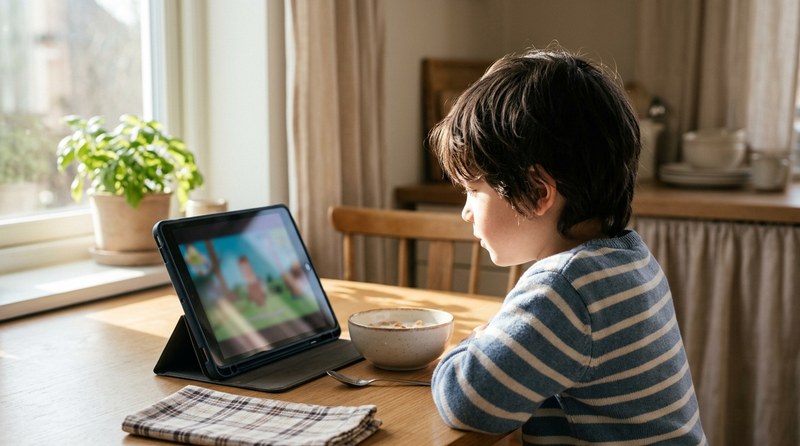
✅ What makes a good channel for children
- Spanish only. If the presenter translates everything, the child listens to the translation.
- Meaning visible on screen. The object, the action, the gesture, at the same time as the word.
- Slow, clear speech with a lot of repetition.
- Songs, which carry pronunciation and rhythm better than speech.
- Short videos. Three to seven minutes suits young attention spans better than half-hour compilations.
👶 Ages 2-5: songs and first words
At this age repetition is the method. The same handful of videos for weeks is correct.
- Learning Spanish with Johanna — a presenter with puppets, covering colours, family, weather, greetings. Slow, repetitive, entirely in Spanish, built for small children.
- Canciones infantiles — traditional Spanish children's songs. Search for canciones infantiles en español. Melody does the memory work.
- Dubbed preschool shows your child already knows in English. Known plot, new language.
🧒 Ages 5-8: stories and simple plots
Children can follow a narrative now, which carries vocabulary along with it.
- Short animated stories in Spanish — look for cuentos infantiles en español.
- Dubbed cartoons of series they like. This is where dubbing earns its place: familiarity removes the comprehension barrier entirely.
- Educational channels for Spanish-speaking children — made for native kids, not learners, which means real language at a level a learner can follow.
🧑 Ages 9-12: real content they would choose
Motivation beats method at this age. The best channel is one they would watch in English.
- Science and curiosity channels for children, in Spanish.
- Kid-friendly vlogs and gaming content from Spanish-speaking creators.
- Dubbed versions of whatever they are into.
For teenagers, treat them as adult learners: learn Spanish on YouTube.
📺 How to use them
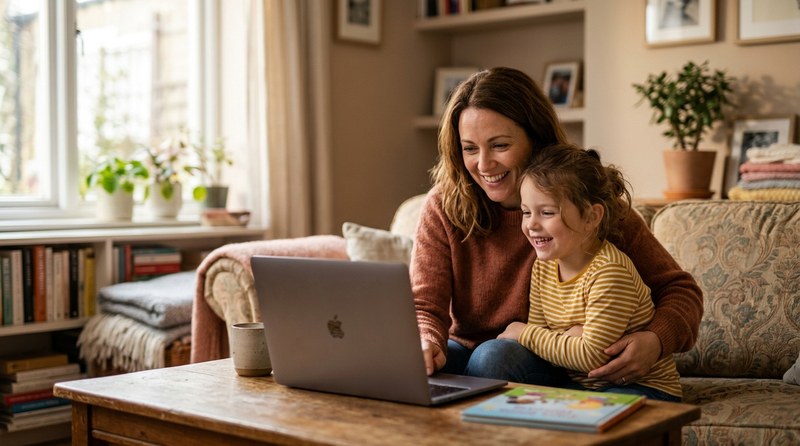
The channel is only half of it. A video watched alone does very little; a video watched with an adult who engages with it does a great deal.
- Watch together, at least some of the time. Pause, point, ask ¿qué es eso?
- Reuse the words the same day, off-screen. Video about fruit, name the fruit at dinner.
- Same video, many times. Children want this anyway.
- 15-20 minutes a day is plenty.
The reasoning behind all of this is in learn Spanish for kids.
👨👩👧 If you are learning too
Very common, and it works well. Watch the children's videos together — they are genuinely good beginner material for adults, because the visual support carries the meaning.
Then do your own practice at your level. Gappier works on any YouTube video, cartoons included: it hides words from the real subtitles and pauses until you type what you heard.
❓ Frequently asked questions
Which YouTube channel is best to teach a child Spanish?
For under-fives, one with songs and repetition in Spanish only. Learning Spanish with Johanna is a good starting point. Above that, dubbed versions of shows they already love.
Should the videos have subtitles?
Not for children who cannot read yet. For confident readers, Spanish subtitles help — never English.
Are cartoons in Spanish enough?
Not alone. Cartoons plus an adult who reuses the words off-screen is what works.
How much a day?
15-20 minutes. More is not proportionally better and it is still screen time.
My child watches but never speaks Spanish.
Normal. Comprehension precedes production, often by months. Ask questions that need one-word answers.
✅ In short
- Spanish only, meaning on screen, short videos, lots of songs.
- Under 5: songs and repetition. 5-8: stories and dubbed cartoons. 9-12: content they would pick themselves.
- Watch with them and reuse the words off-screen.
- 15-20 minutes daily, the same videos repeatedly.