Colombian Slang: 30 Words and Phrases Colombians Really Use
Colombian Spanish has a reputation as one of the clearest accents to learn from, and it deserves it. Then a Colombian friend says ¡qué chimba, parce! and the clarity disappears.
Colombia has some of the most distinctive slang in the Spanish-speaking world, and thanks to its music and TV, a lot of it travels. This is the vocabulary that comes up constantly in real conversation, in songs and on YouTube.
🗣️ The ten you will hear first
| Slang | Meaning | Example |
|---|---|---|
| parce / parcero | mate, buddy | ¿Qué más, parce? |
| ¿Qué más? | How are you? What's up? | ¡Hola! ¿Qué más? |
| ¿Quiubo? | What's up? (from ¿qué hubo?) | ¿Quiubo, cómo vas? |
| bacano | cool, great | Esa película está bacana. |
| chévere | cool, nice | ¡Qué chévere! |
| ¡qué chimba! | how awesome! (very informal) | ¡Qué chimba de concierto! |
| listo | OK, sure, done | ¿Nos vemos a las ocho? — Listo. |
| de una | absolutely, right away | ¿Vamos? — ¡De una! |
| camellar | to work (hard) | Toca camellar todo el día. |
| rumba | party, night out | ¿Hay rumba el viernes? |
¿Qué más? confuses everyone at first. It sounds like "what else?", but as a greeting it just means "how's it going?". The answer is bien, ¿y tú?, not a list of other things.
Chimba needs a warning. ¡Qué chimba! means "awesome" and you will hear it all the time among young Colombians, but the word has a vulgar origin and some combinations with it are insults. Recognise it; use it only with friends who use it with you.
👥 People
| Slang | Meaning |
|---|---|
| parce, parcero | friend (originally from Medellín, now everywhere) |
| llave, llavería | close friend, literally "key" |
| pelado / pelada | kid, young person |
| chino / china | kid (in Bogotá) |
| mono / mona | blond person |
| sumercé | a warm, respectful "you" (Bogotá and Boyacá) |
| man | guy, from English: ese man |
Sumercé is a lovely one. It comes from su merced, "your grace", and in the highlands around Bogotá it is used as an affectionate, polite "you", even with family.
☕ Daily life
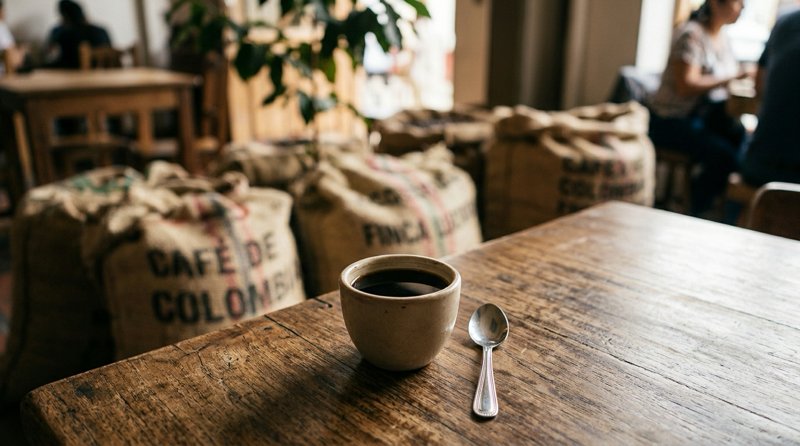
- Tinto — a small black coffee. Not red wine, which is vino tinto.
- Guayabo — a hangover.
- Pola — a beer, especially in Bogotá.
- Guaro — aguardiente, the anise spirit of Colombian parties.
- Ñapa — a little extra for free when you buy something.
- Hacer una vaca — to pool money, literally "make a cow".
- A la orden — "at your service"; what every shop and street seller says.
- Paila — tough luck, too bad. ¿No hay entradas? Paila.
- Chiviado — fake, counterfeit.
- Pecueca — foot odour. Surprisingly frequently searched.
😮 Reactions and attitudes
- Berraco — depends entirely on context: brave and tough (es un berraco), amazing, or angry (estoy berraco).
- Mamar gallo — to joke around, tease someone (especially on the Caribbean coast).
- Dar papaya — to make yourself an easy target, leave yourself exposed. No dé papaya — don't flash your phone around.
- ¡Qué pena! — sorry, how embarrassing. Not "what a shame" as in Spain.
- Echar los perros — to flirt with someone, hit on them.
Dar papaya is practically a Colombian philosophy, and if you visit you will hear it as advice within your first day.
🗺️ One country, several accents
Colombian slang is not uniform. The three accents you will meet most:
| Region | Known as | What to listen for |
|---|---|---|
| Medellín and Antioquia | paisa | parce, sing-song intonation, vos among friends |
| Bogotá | rolo | crisp, clear, sumercé, lots of usted |
| Caribbean coast | costeño | fast, dropped s, mamar gallo |
A Colombian detail that surprises learners: many Colombians use usted even with friends and family, where other countries would use tú. It is not cold; it is just how they talk.
⚠️ A word on insults
Colombian Spanish has some insults that sound harmless and are not. A medical-sounding word you will hear in Medellín slang is one of the strongest insults in the country. We are not listing them; if a word gets a sharp reaction, that is your answer.
🎧 Learning Colombian slang by ear
Colombian music is one of the easiest ways in, because it is everywhere: reggaeton from Medellín, vallenato from the coast, pop from Bogotá. Colombian telenovelas, the most famous being Yo soy Betty, la fea, are another classic source.
- Pick Colombian speakers on purpose. If your Spanish listening is mostly Mexican or Spanish, a week of Colombian content resets your ear. See Mexican or Castilian Spanish for how the varieties compare.
- Use Spanish subtitles, so you see parce and bacano written, not translated away. More in Spanish subtitles to learn Spanish.
- Learn songs line by line. Learning Spanish with music explains how.
- Check what you really catch. Gappier hides words from a YouTube video's real subtitles and pauses until you type what you heard. Regional slang is exactly what your ear skips at first.
❓ Frequently asked questions
Do Colombians speak Spanish?
Yes. Spanish is the official and majority language of Colombia, alongside dozens of indigenous languages and English-based Creole on the islands of San Andrés.
What does chimba mean?
¡Qué chimba! means "awesome!". The word itself is vulgar in origin and appears in some insults, so treat it as very informal.
What does parce mean?
Friend, buddy. It is short for parcero, originally from Medellín slang and now used across Colombia.
Is Colombian Spanish good for learners?
Yes. The Bogotá accent in particular is often called one of the clearest in Spanish. The slang is the part that takes extra listening.
What does berraco mean?
It depends on context: tough and brave, amazing, or angry. Tone tells you which.
✅ In short
- Colombian Spanish is clear; its slang is not, until you have heard it a few times.
- Start with parce, ¿qué más?, bacano, chévere, listo, de una, camellar, rumba.
- Slang changes between Medellín, Bogotá and the coast.
- Learn it from Colombian music and shows, with Spanish subtitles.